
Description
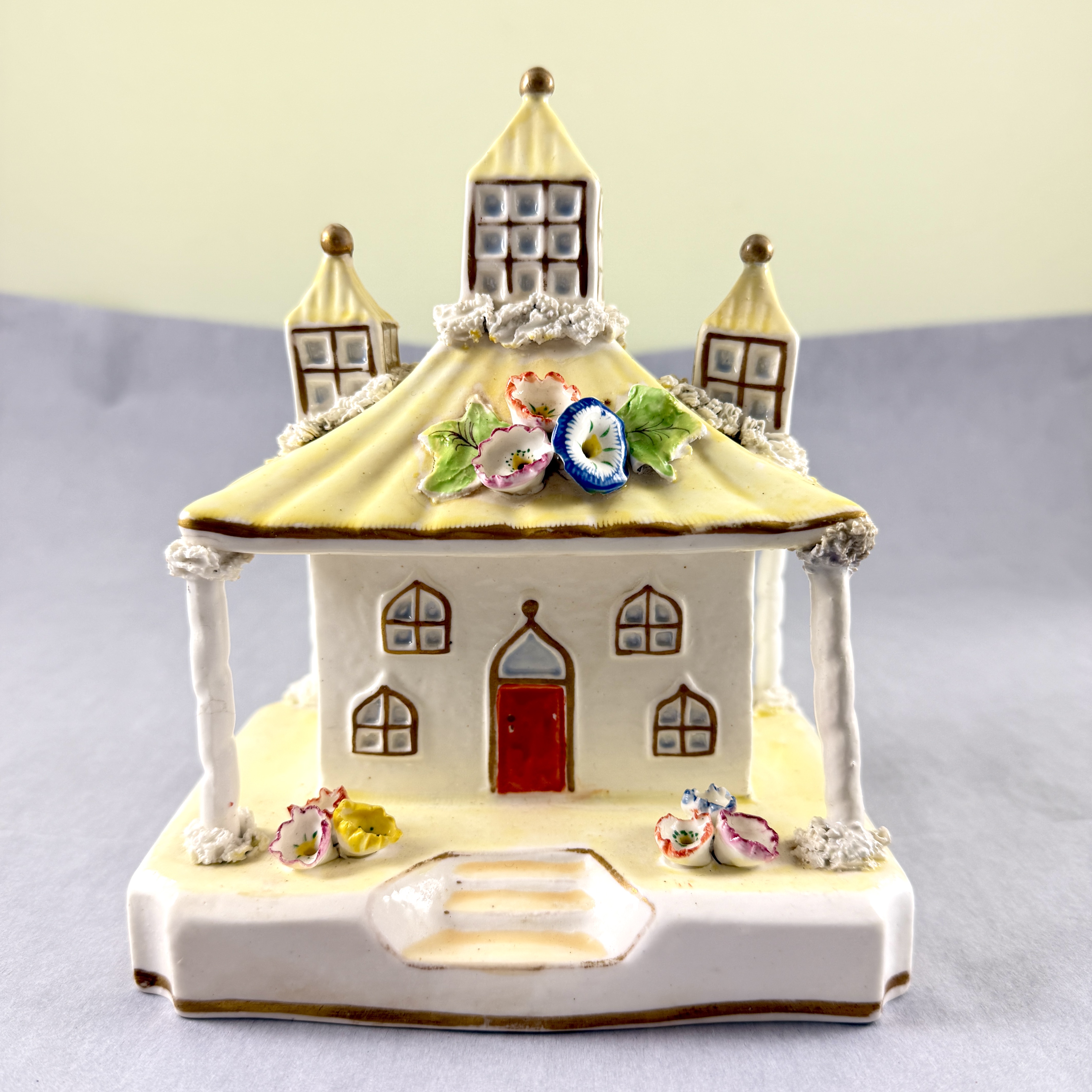
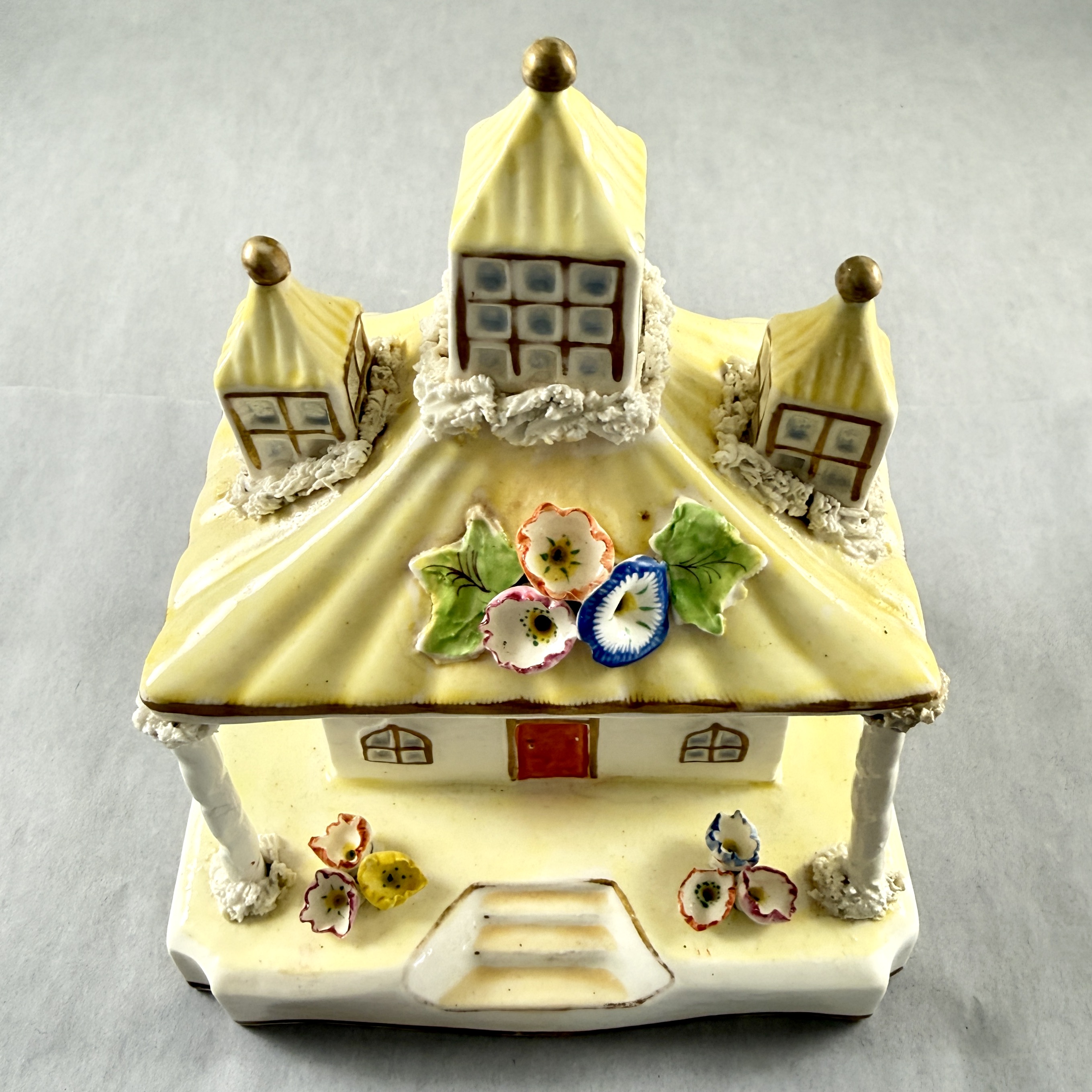
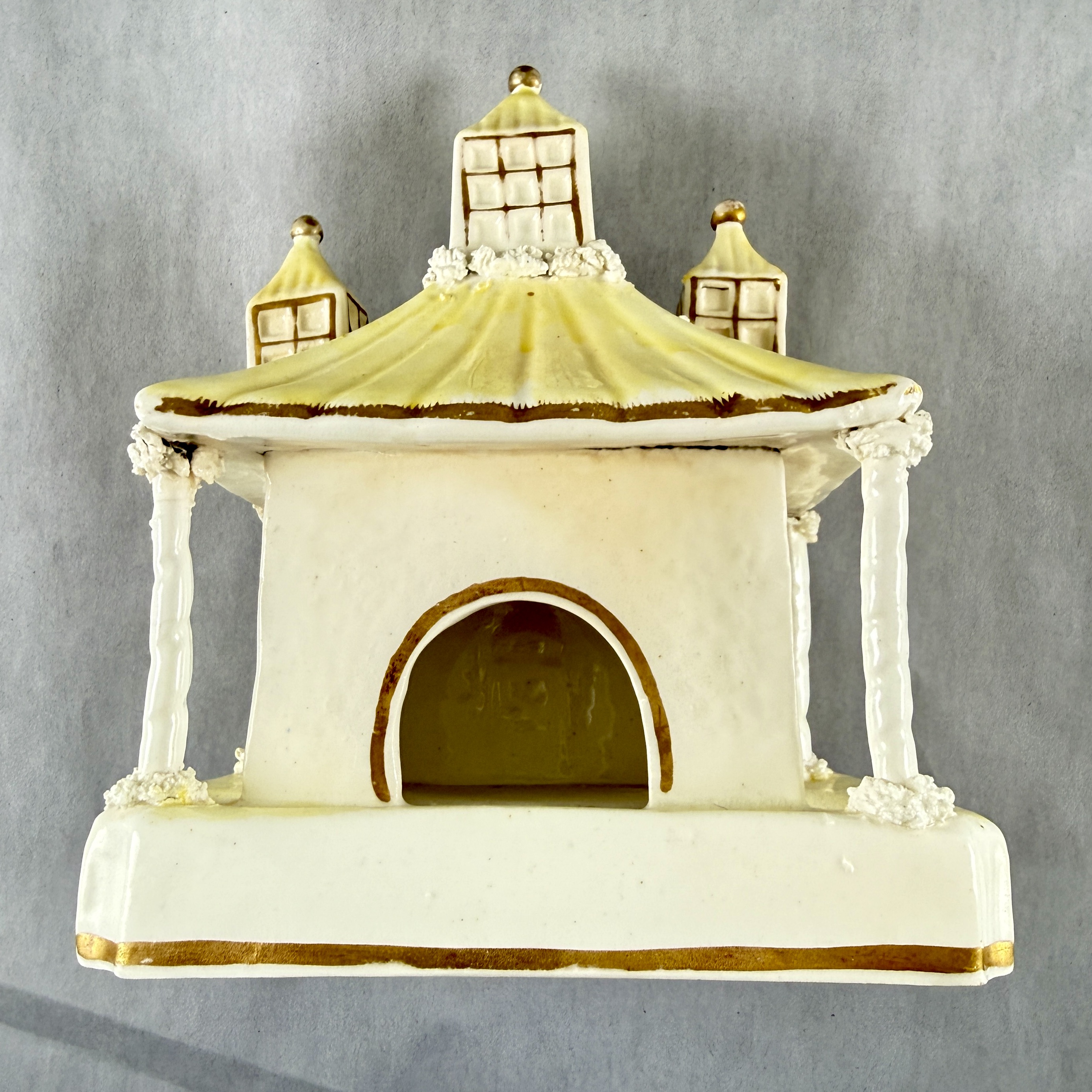
An English Staffordshire pastille burner, circa 1830-1860.
These earthenware pieces were used for burning aromatic pastille lozenges to cover the noxious odors of everyday Victorian Era living.
Pastille burners were shaped as dovecotes, cottages, churches, castles, and flower-covered summer houses.
The smoke from the burning pastille flowed through the cut-out windows or chimneys of these follies, scenting damp and musky rooms.
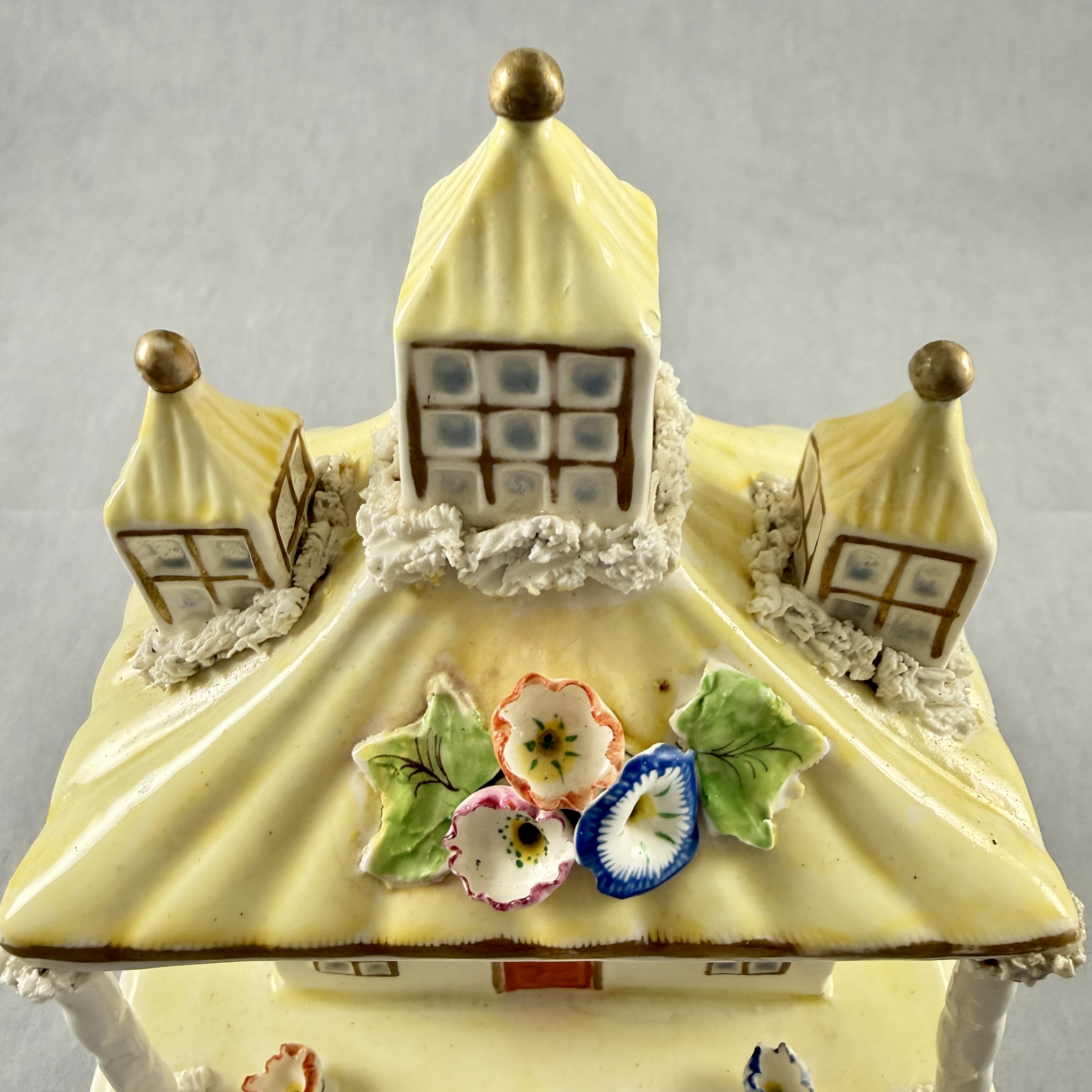
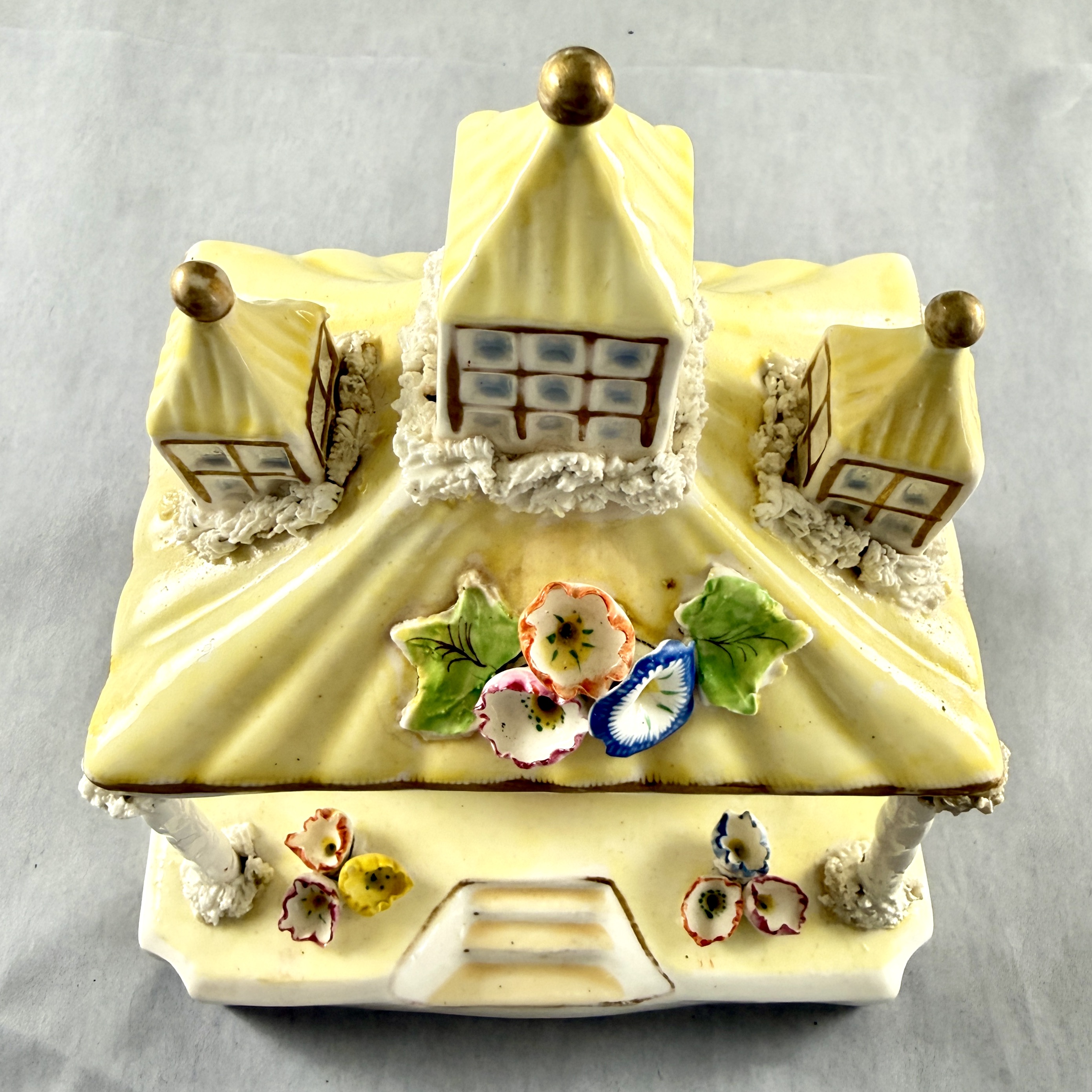
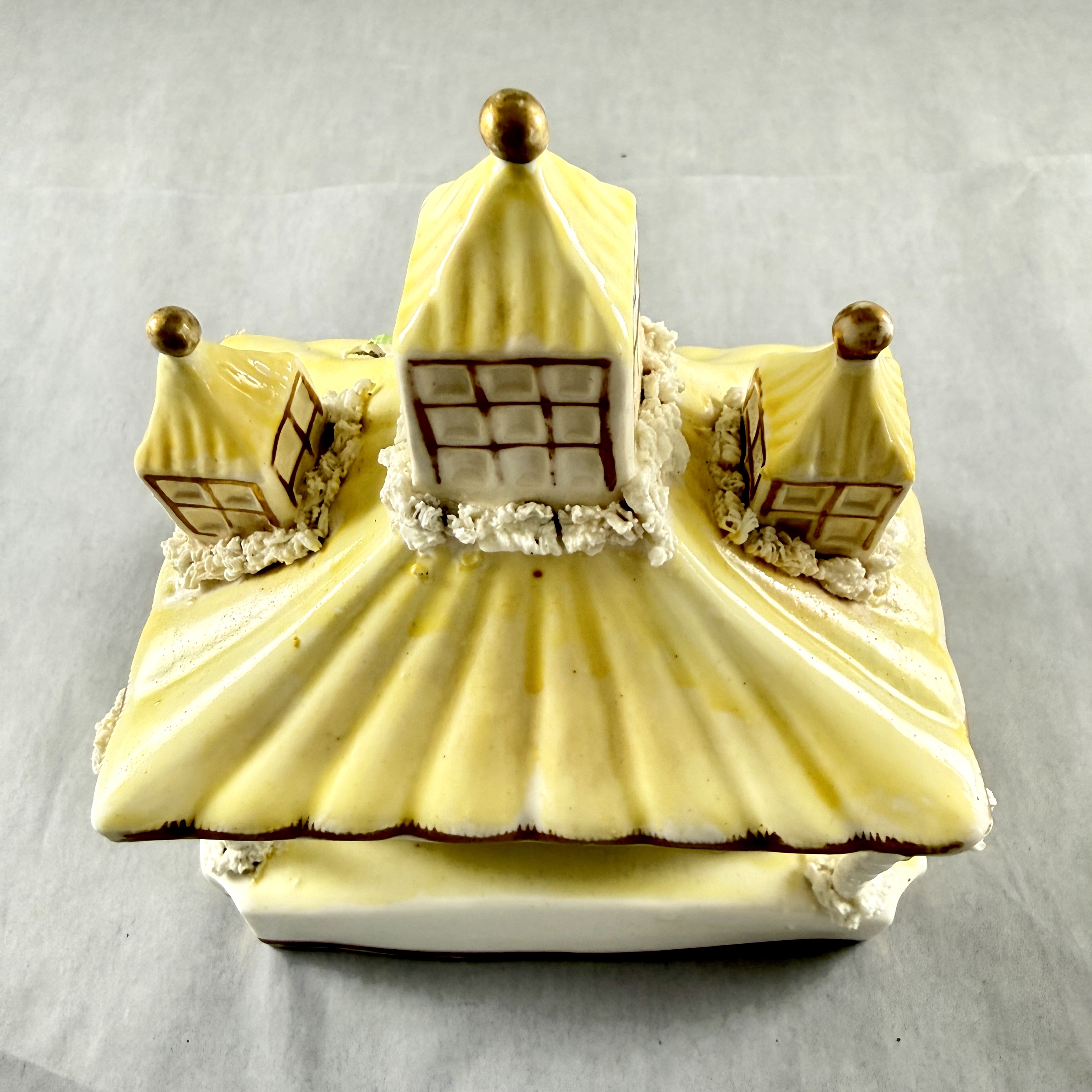
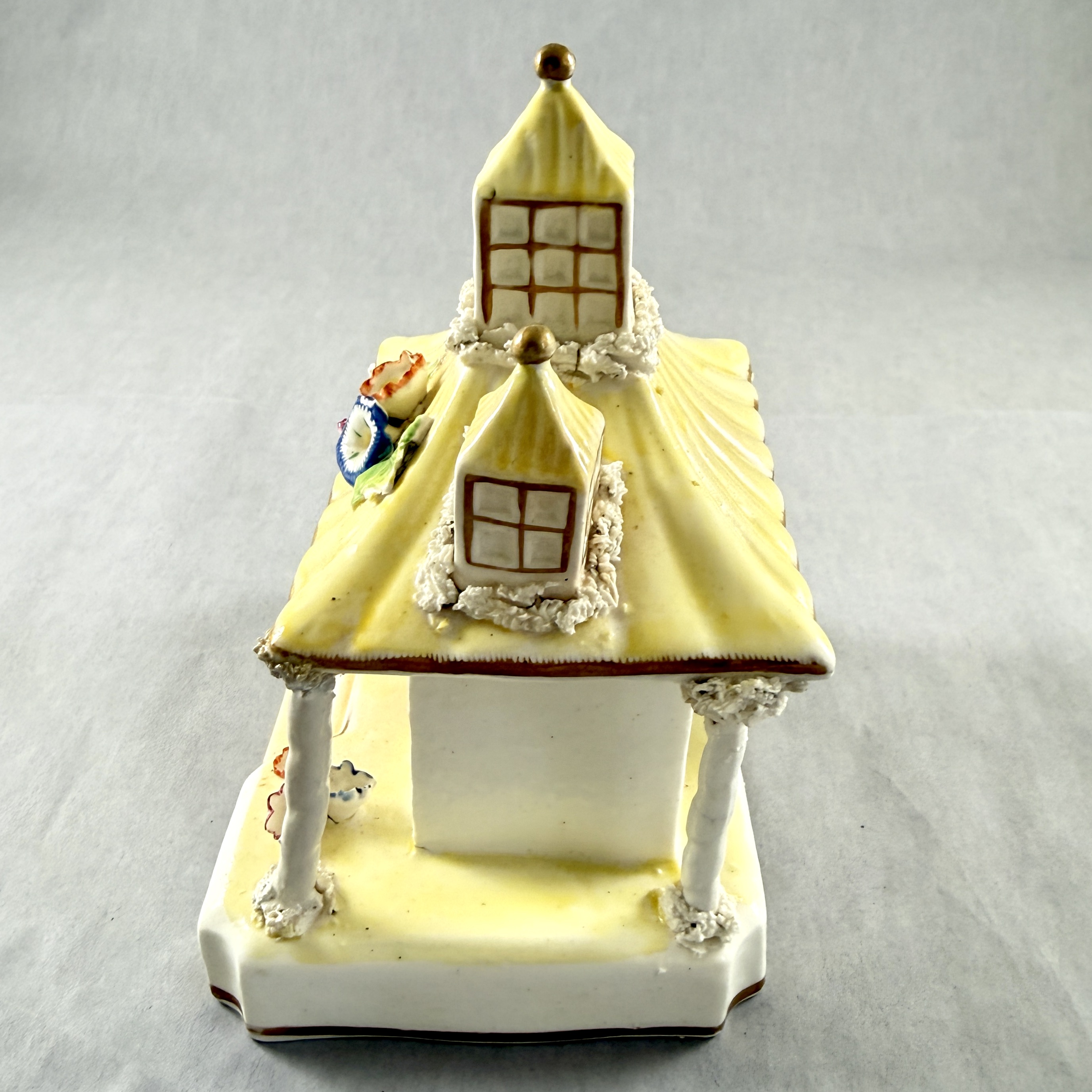
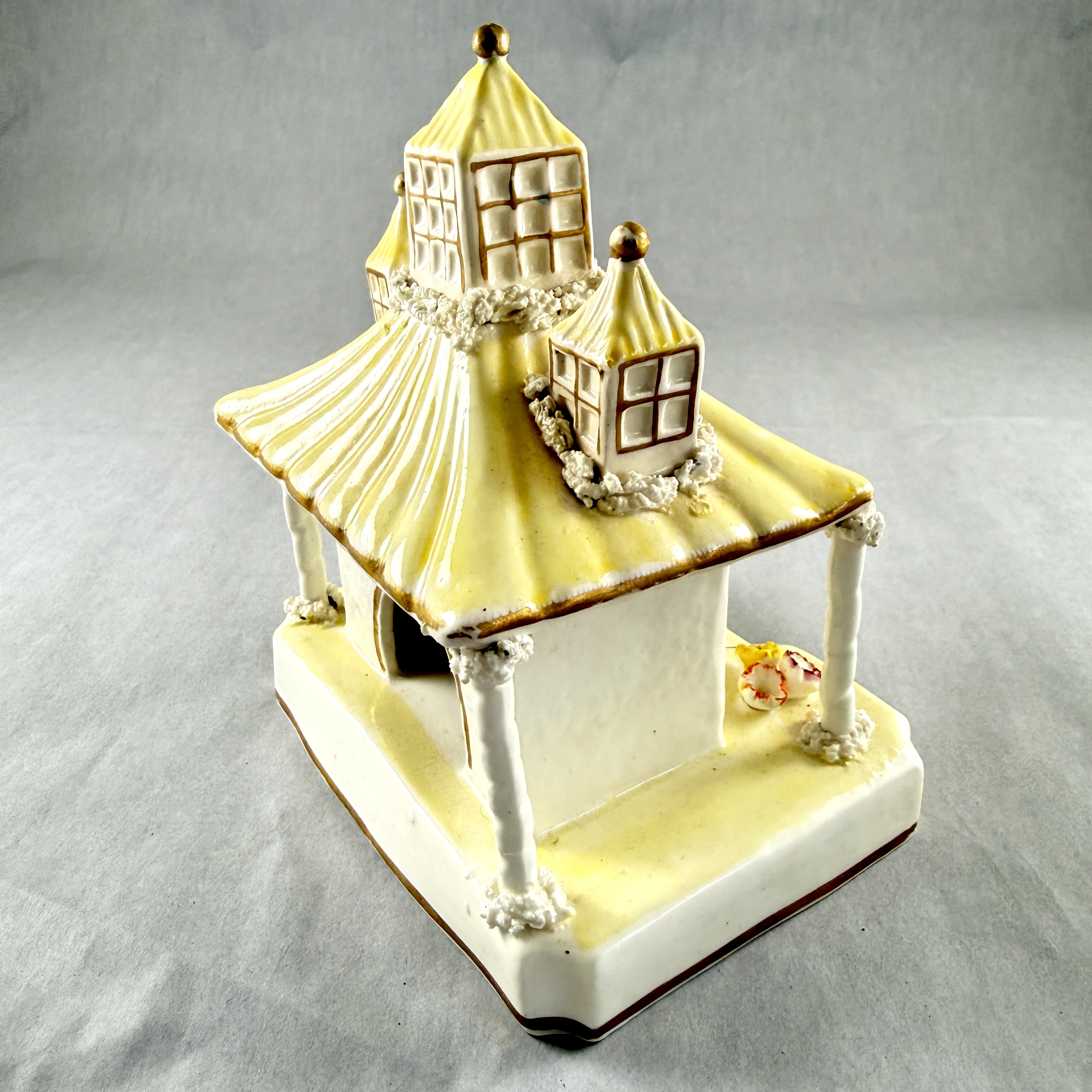
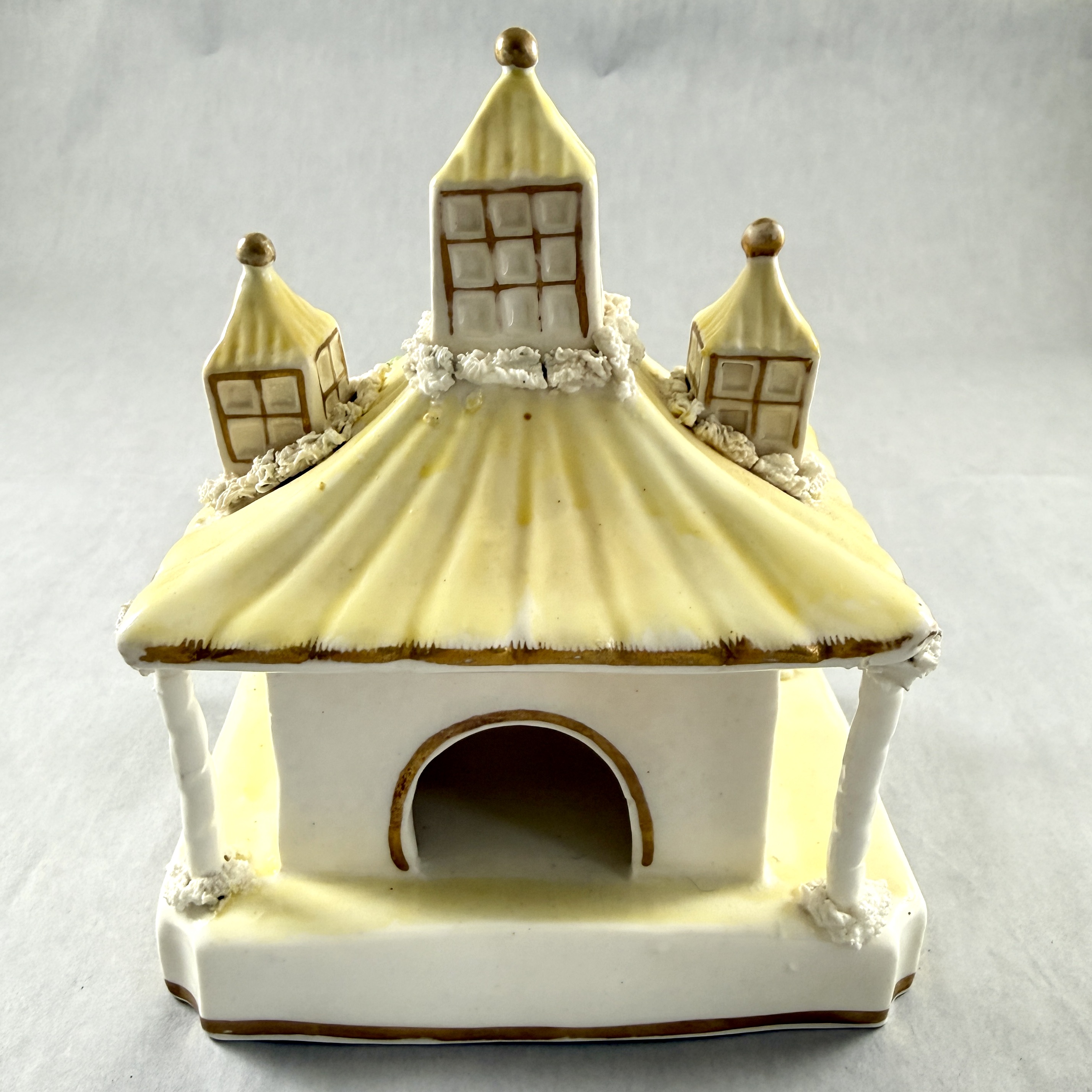
This example shows a yellow roofed cottage with three windowed chimneys.
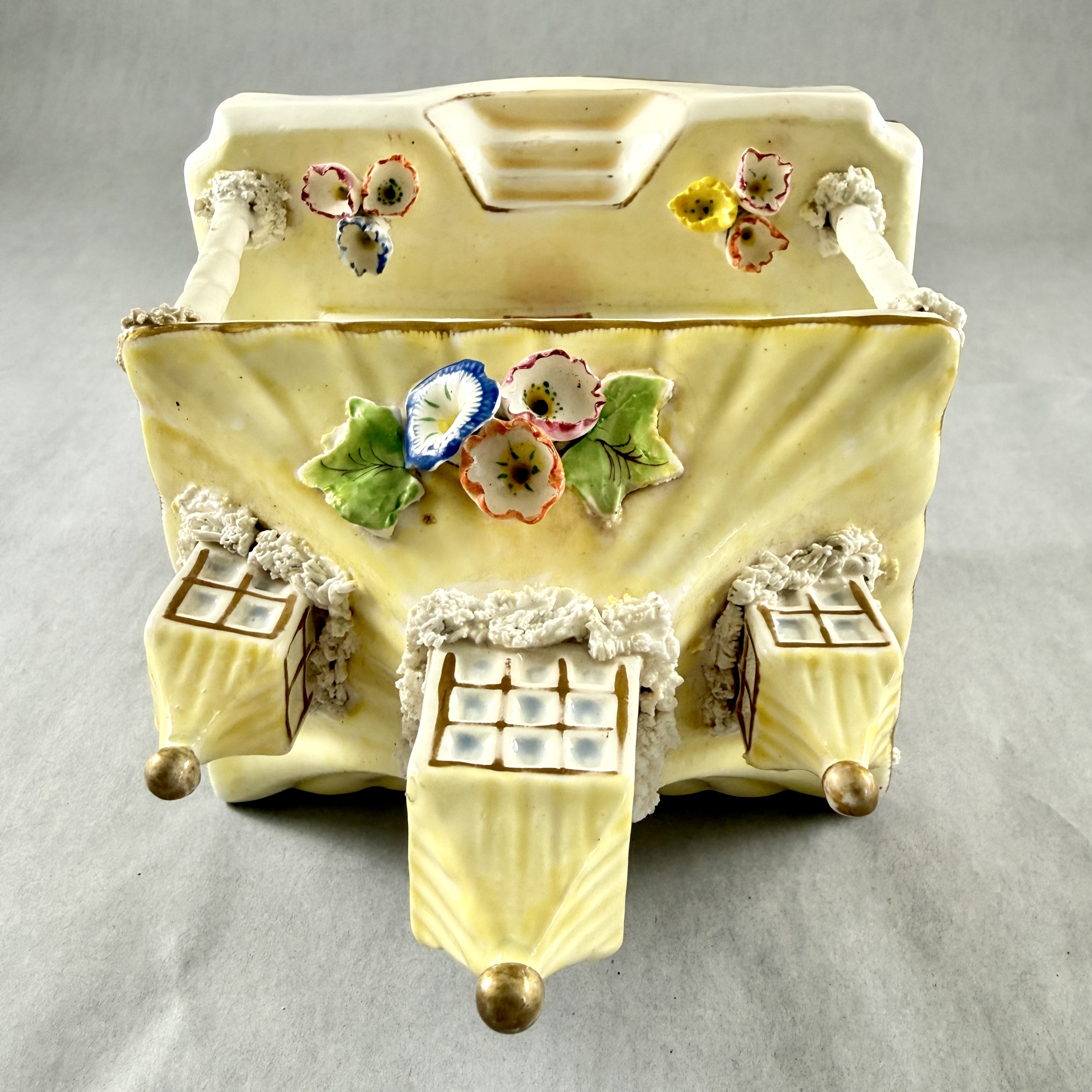
The roof shows a Pagoda influence. Applied flowers and bocage, columns support the front porch roof.
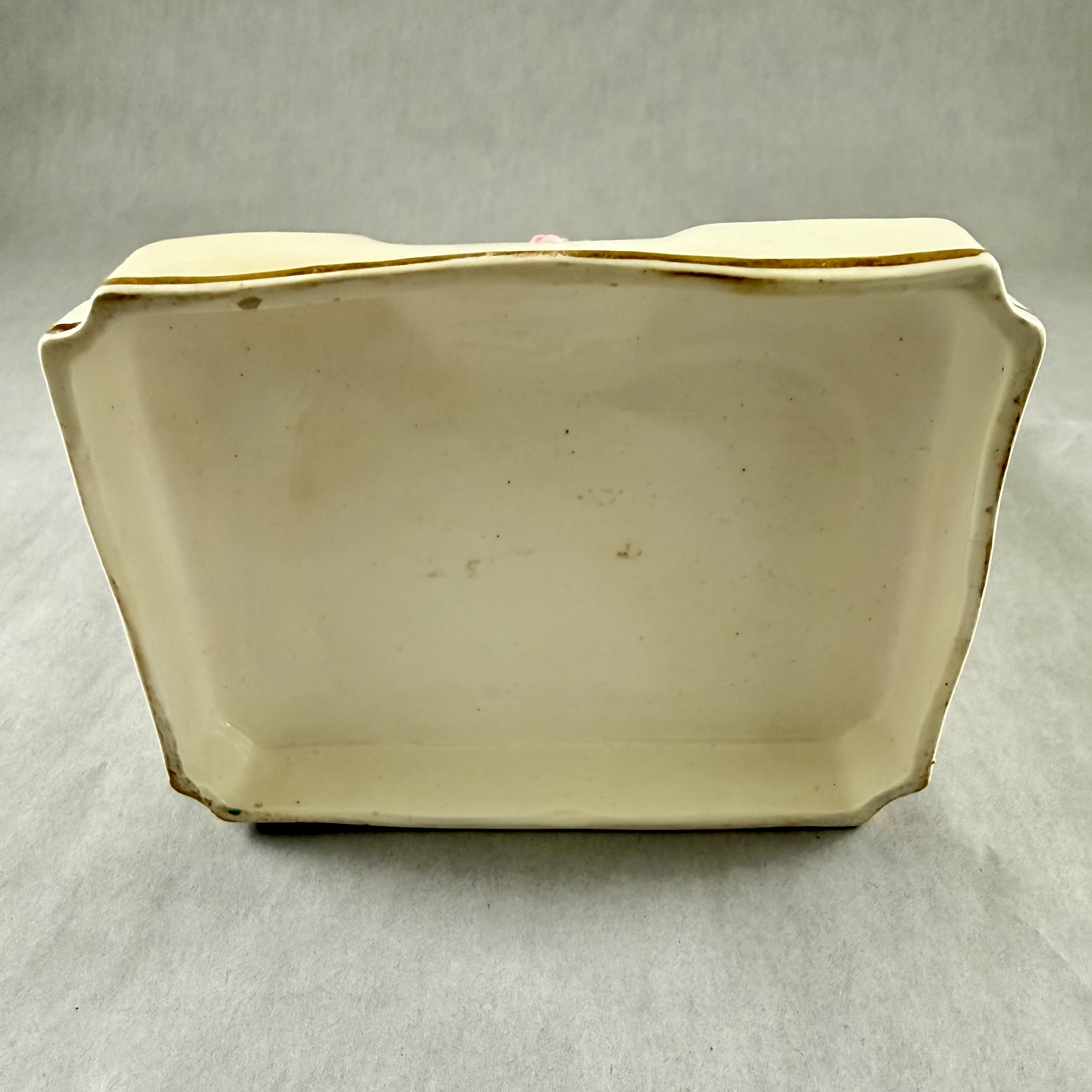
Cut-outs on the rear of the cottage for Pastille placement.
Beautifully applied bocage and flower heads, gilded accents.
6 in. L x 4.5 in. W x 7 in. H
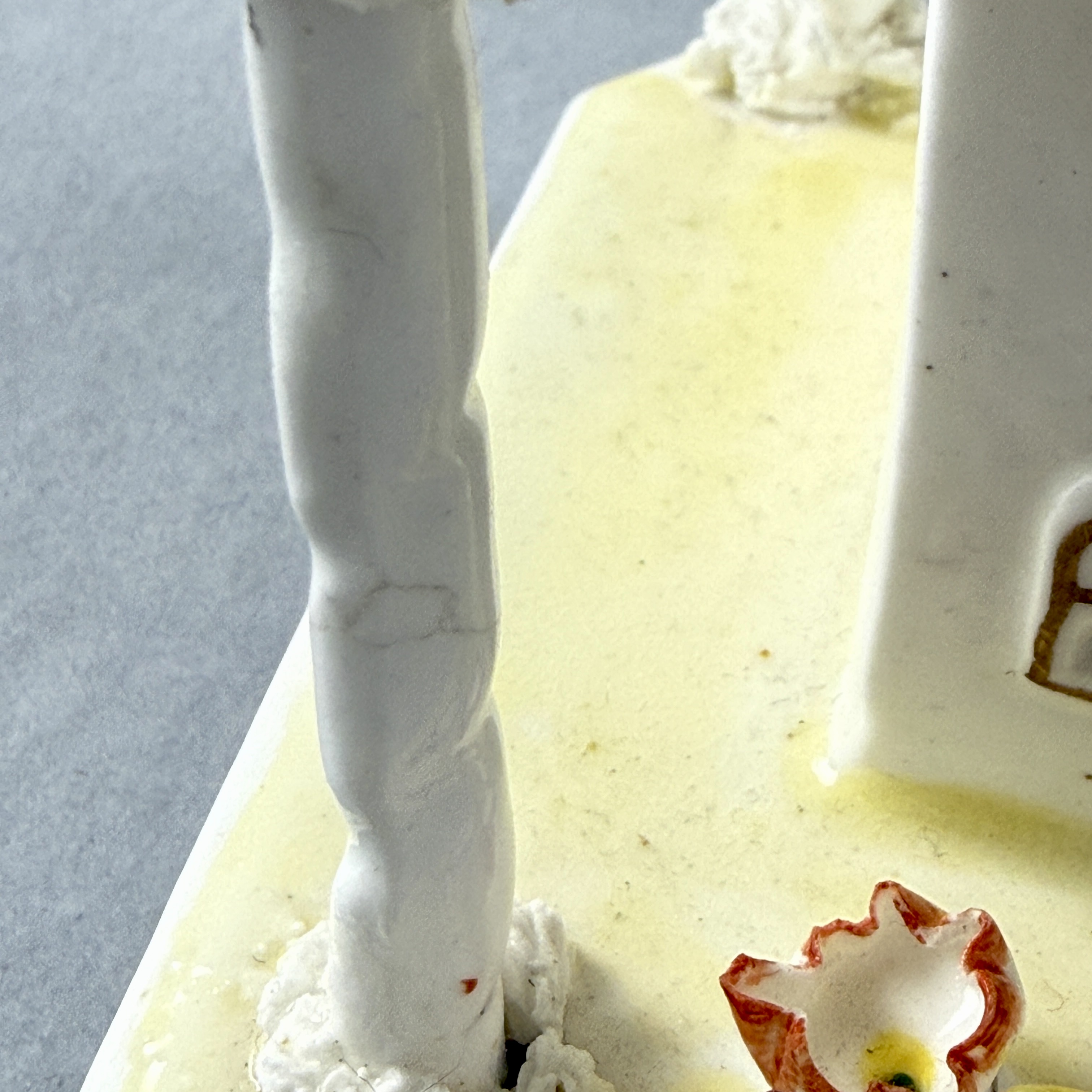
Showing the expected light wear from age and use, a stable hairline to the front left porch column.